Nail Reconstruction Techniques

There are various nail reconstruction techniques
The choice of the appropriate technique depends on the specific condition for which the patient visits the podiatry office.
This table, based on the book *Handbuch für die medizinische Fußpflege—Fundamentals of Podiatry*, is intended to help you choose the appropriate technique.Please open the PDF file. 
What Are Acrylic Varnishes Used For??
Sleeki and acrylic-enriched nail polishes are used for both fingernail and toenail styling.They are used as topcoats to smooth out ridged, uneven nails.These paints offer enhanced durability compared to traditional paints.They adhere very well to the nail plate.
What is Nagelmasse used for??
Nail gel is a type of gel containing flexible resins.Some nail pastes contain antifungal agents, such as Nagelmasse Peclavus..They offer excellent traction and flexibility.The nail gel cures on its own within a few minutes without the use of UV or LED light.In nail reconstruction, it is used as a bonding agent for brittle, cracking nails.In combination with a tamponade, it is used as a partial prosthesis for nail defects.In the latter case (nail loss), Nagelmasse and a tamponade are used alternately.Once the desired nail thickness has been achieved, the nail gel is blended with the rest of the buffed and cleaned nail to form a single unit.A flat metal spatula is used to apply and smooth the mixture.A metal cuticle pusher can be reused, provided that the appropriate disinfection and sterilization procedures are followed when working on nails affected by fungal infections..
How to Use Nail Reconstruction Gels?
Gels are much more flexible than, for example, acrylic.Therefore, reconstructing defects—that is, parts of the toenail plates—is more advisable than reconstructions performed using the acrylic method.Pedique gels containing antifungal agents, such as piroctone olamine, can also be used to restore nail plates showing signs of fungal infection (after they have been cleaned), on nail plates with defects, on brittle nails with deformities, and as strong support for orthonyxial braces..
The gels are cured using UV light from UV lamps, such as tunnel lamps or portable lamps..
The Use of So-Called "Cold" Polymers.
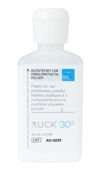
This method includes products such as ONYCHOLIT, RUCK acrylic powder, and liquid.
The specially formulated ingredients in RUCK and Unguisan products make them suitable for toenail reconstruction and prosthetics.The compound serves as a strong adhesive for bonding dentures made using the Greppmayr technique with a special film.This acrylic compound is also used for partial nail reconstruction prior to the application of orthonyxial braces to provide strong support for the nail plate.
This quick-drying acrylic gel adheres firmly to the nail and nail bed.The cured material is flexible and, after a certain amount of time, peels away from the substrate on its own, allowing the plate to grow properly.RUCK acrylic compounds work while you walk.They don't break; they're strong and flexible.
Fiberglass Technique Using Silk.
It is used to reconstruct brittle, ingrown, damaged, deformed, and splitting nails.
The technique involves using very delicate materials, such as silk and resin, which is cured using a sprayed activator or an activator applied with a brush.The structure of nails reconstructed using the fiberglass method is relatively thin and strong.
How to Make a Full Nail Prosthesis Using the Eckle Method?
Thanks to this method, nails with defects or deformities, as well as toes missing a large portion (2/3) of the nail plate, can be treated.This technique is one of the more difficult ones and requires a great deal of precision.It involves making a mold (an impression or "negative") of the nail using silicone compound, a spoon, and fast-drying, hard plaster.
After thoroughly kneading the silicone mixture into a ball, place it on your finger and then press it down with a transparent Eckle spoon.After about 3 minutes, remove the spoon with the mixture still clinging to it.At that point, the negative image of the entire nail or part of it, as well as part of the finger, is already visible.
Any cured silicone compound protruding beyond the edges of the mold should be trimmed off.At this point, you can lightly coat the silicone mold with nail oil and fill it with a thin mixture of plaster and water.Thanks to its thin consistency, the plaster mixture will thoroughly fill all the gaps in the mold, preventing any air bubbles from forming..The hard plaster cast is practically ready for the podiatrist to use.You can see all the indentations and imperfections in the nail, just as you would on a natural toe.
Erkodur film can be used on such a plaster model as a prosthesis according to the Grepmayr technique.To prevent the foil nail plate negative from sticking to the plaster cast, you can coat it with nail oil.
Greppmayr Technique
It involves the use of a special film that, once heated, is applied to the impression material, onto which the reconstructed plaster finger is pressed..After about 4–5 seconds, once the film has cooled, the plaster cast can be removed.An artificial nail can be cut out of the embossed film and filed down.Using the acrylic resin discussed earlier, it is glued to the rest of the nail and the nail bed.To use this reconstruction technique, the nail must be at least 1/3 of its total length.
Once applied, the artificial nail is smooth.You can paint it with nail polish or buff it down and apply UV gel.
All nail reconstruction techniques and methods are important, useful, and worth learning.
No description can replace hands-on training, so please keep that in mind and take advantage of the podiatry training courses on nail reconstruction.
I hope you have a lot of fun and, above all, find satisfaction in the nail reconstructions you create..
Marek Cyrulik
text added – October 8, 2014