Podiatrist at a beauty salon

We're hearing more and more about additional podiatry services offered at beauty salons.All you need is a small, separate room with an armchair, a chair, a nail drill, nail clippers, and a few products to soften the skin—and that's it.
In reality, this very often amounts to nothing more than giving the client a cosmetic pedicure.Soaking the feet and removing calluses from the heels using a foot file is often referred to as a therapeutic pedicure or a foot file pedicure.Then, of course, a massage, and—“Thank you, that’s all.”.
Everything is fine as long as the customer has generally healthy feet.
However, if a proper medical history wasn't taken before soaking the feet and, for example, it turns out that the client has diabetes and her skin is accidentally injured, this could lead to a lot of problems later on.
Soaking your feet in the treatment room is, of course, allowed and even recommended.Thanks to the right lotions or bath salts , your feet not only smell great, but are also disinfected.It's a kind of luxury for both the client and the specialist.Not all alloys can be soaked.There are many contraindications that podiatry specialists are well aware of.You often hear that beauty salons use only milling machines with so-called "caps" or "omega" attachments to remove thick skin, corns, or calluses.According to many well-known podiatrists, this is a big mistake.For procedures like these, you should use a scalpel to remove thick skin and a podiatric chisel to remove calluses..However, these are procedures that require considerable skill and knowledge not only of the structure of the skin but also of the entire foot.Such procedures are classified as podiatric treatments and should be performed by individuals trained in this field.To perform podiatric procedures, one must have specialized knowledge and skills in using the appropriate tools.It is advisable to gain practical experience under the guidance of a qualified podiatrist.
More than just removing dead skin.
Exactly—after all, beauty salons and nail salons also get clients with damaged nails.When it comes to toenails, a pedicurist may not always be able to handle this kind of problem.
If the nails are healthy and only a small part of the nail has been damaged, then you can use, for example, the fiberglass method or acrylic on a nail form.However, if the damage is more extensive, then a good solution is to use a nail reconstruction compound.
If you notice changes in your nails but are unable to diagnose the condition or disease, do not perform any treatments until you find out what it is..A trained podiatrist can make a diagnosis and provide appropriate treatment.Often, when there are more serious changes or damage to the nails, we're dealing with a fungal infection.In such cases, a sample is collected for mycological testing.Once you receive the results, you can begin treatment, such as with PACT MED.
Ingrown toenail.
You've probably dealt with ingrown toenails in your office more than once.Are you wondering how to deal with this??Here, too, a professional assessment by a podiatrist is needed.
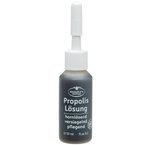
Thin nails can be “straightened” by softening the nail shaft and applying a compress.To that end, you’ll likely use natural propolis products , which are exceptionally effective at tackling these kinds of tasks.A product called Peclavus Vorbehandlung is also ideal for this type of task.
You can straighten stronger nails using special GOLDSTADT PROFESSIONAL gold strips
To treat a severely ingrown toenail, you’ll need not only podiatric angle clippers to trim the excess part of the nail, but you’ll also need to use a special ORTOGRIP Professional brace (also known as an orthonyxial brace)..Unfortunately, in order to treat such cases, you must first complete training in the application of orthonyxial braces. .RUCK ORTOGRIP PROFESSIONAL, PODOKLAMRA, Frasera, VHO, and 3-TO clamps are available on the market, but you can purchase any of them only upon presentation of a certificate attesting to your ability to apply the specific clamps.
This is just a small sample of podiatric topics.
The cases described above represent only a small fraction of the knowledge in the field of podiatry.To learn about various foot conditions, diseases of the lower extremities, terminology used in podiatry, prevention, and treatment methods, one needs a great deal of study and determination, practice, patience, and a steady hand—and above all, one must feel a calling to help the sick and suffering.
If you want to expand the services offered at your beauty salon, consider broadening your knowledge and skills to include podiatry.Take training courses under the guidance of a qualified podiatrist-trainer.
You can also send a capable and trustworthy person—a beautician from your salon—to the training, or simply hire a qualified podiatrist.
Then display the certificates you've earned where your customers can see them.Offer them additional podiatry services.
Remember that high-quality service always earns the appreciation of customers.A satisfied customer is the best advertisement—they’ll recommend your practice and bring in new customers.
Read our Podiatry Guide.We post new articles regularly.
July 2012
Author: Marek Cyrulik