Where does rust come from on stainless steel tools or cutters?

Rust is the result of corrosion —that is, the deterioration of metal.It forms most rapidly through the oxidation of iron and its alloys in a humid environment.
In its early stages, rust on metal looks quite harmless.It is a reddish-colored ointment that, over time, turns into a reddish-brown scab.
Rust eats away at metalal.
Once metal is infected with rust, it is practically impossible to cure.It's as if a weakened body were infected with a dangerous virus or bacterium.
Can tools such as nippers, scissors, probes, and stainless steel cutters rust over time??
NO - if the instruments are made of high-quality stainless steel and if safety rules and procedures related to their storage and disinfection are followed.Then they'll last a very long time.Perhaps until they wear out—for example, due to wear and tear on the blades, a fall, warping, etc..
YES – if the quality of the metal was not properly ensured during production, or if ordinary (rust-prone) steel alloys were added during the production of iron alloys (at the steel mill).
YES - if tools made of carbon steel are stored with or come into direct contact with stainless steel tools.100% of the time, if stainless steel comes into contact with rusty steel.
All it takes is brief contact with rust, or for a tiny speck of rust to get into a crevice in the stainless steel pliers, for them to become contaminated and start rusting..
The rule is that good steel will take on the properties of bad steel, but never the other way around.

How to Prevent and Protect Expensive Tools and Cutters from Rust?
- First and foremost, —do not buy tools from unreliable sources or from stores that are unknown or do not specialize in this industry.. Inexpensive tools may be made using less expensive technology and materials.The issue of tool quality control also plays a major role here.
- If you want to disinfect and sterilize your tools, avoid buying tools that are painted or coated with a non-stainless metal, such as nickel-plated or chrome-plated tools..Even the smallest scratch will allow oxygen to penetrate the bare metal, causing it to oxidize—that is, rust will begin to form..The same applies to nail clippers with rubber, silicone, or rubberized handle covers.Down there, moisture lurks due to the temperature difference, and rust is just waiting for the chance to appear.
- Never store stainless steel tools together with carbon steel tools in the same container .
- Do not disinfect tools—especially cutters —at the same time, in the same solution , or in the same container as tools and cutters made of carbon steel..
- If you realized too late that the disinfection was performed using a tool with even the slightest traces of rust, you must immediately rinse all the tools that were soaked with it under running water and then soak them for several minutes in distilled water, and then dry them thoroughly.Empty the container and dry it.Then repeat the bath disinfection (preferably ultrasonic) without the “contaminated” instrument and using a new disinfectant solution.
- If you're using disinfectant wipes and come across a tool with a little rust while doing so, you cannot use that same wipe to disinfect subsequent tools.. You need to throw away the tissue and get rid of the rusty tools.
- Keep a close eye on your tools.If you notice even the slightest trace of rust on a milling cutter, nippers, etc..You need to get rid of it because it will infect other tools.
- You can disinfect surgical steel (cemented carbide) burs along with stainless steel burs , as well as diamond, titanium, and porcelain burs..
- Disinfect the cap holders (so-called rubber cutters) separately, preferably in a separate small container or with disinfectant wipes.
Cap holders are typically made of lower-quality metal (shanks).Disinfect them in a separate, small container.In that case, you don't use much hand sanitizer.
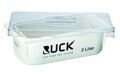
RUCK cap holders can be both disinfected and sterilized. - It's also a good idea to have a separate, small container for disinfecting dental burs and a separate one for polishers.
Although you can use just one small container for different types of cutters, you have to empty and dry it thoroughly each time. - Do not buy or use cheap cutters manufactured outside the European Union.Most often, they are unlabeled and of very poor quality.
- Don't confuse rust with a rusty film.A rusty-looking film, although similar to rust, may not actually be rust.Rusty, brown, or yellowish deposits form as a result of improper maintenance or the use of unsuitable oil (applies to forceps), poor-quality disinfectant solutions and concentrates, and when temperatures are too high—for example, in an autoclave.
- It is important to follow the instructions and observe the recommended disinfection time for the instruments.You'll find this information on the label of the ready-to-use disinfectant solution or concentrate.
- Remember, you must not exceed the disinfection time and thus the effective duration of the solution.Never leave tools soaked in liquid overnight.Time is of the essence when it comes to disinfection, and it is important to adhere to the recommended time frame.
- Tools must be sent for disinfection immediately after the procedure is completed..Then they must be washed under running water.
If the tools need to be sterilized, they can easily wait 6 hours for the process to be completed. This time limit must not be exceeded.Otherwise, the disinfection must be repeated.
Additional information: If the tools or cutters were very dirty or contaminated and underwent a more thorough mechanical cleaning—for example, with a brush—they should be disinfected again..This is followed again by rinsing under running water or in distilled water. - Don't buy unknown disinfectants for tools.Very inexpensive fluids may be of poor quality or too harsh on tools.Sometimes these liquids contain acids that are too strong and/or other substances that are harmful to precious metals.
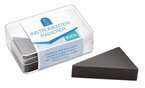
- You can use a special abrasive eraser to remove the film.Never use a file or a router bit for this.
- When inspecting tools, sort them appropriately.Don't stack them on top of each other; keep them separate..Examine them carefully and open the pliers and nippers.
- After disinfecting the bath and washing, dry it off at . Use disposable paper towels for this..Skip this step if you're using only disinfectant wipes.In this case, the medication is released on its own.
- After disinfecting the burs, rinse them thoroughly under running (preferably warm) water.Use a brush for this purpose: made of brass wire or PVC bristles.
- Never use pressurized air—such as from a hair dryer—for drying, because rust particles can get into the gap in the pliers' joint and cause them to"infect".


Stainless steel tools and cutters are quite an expense.Especially when the office needs more than one set of them.So it's important to know not only how to use them, but also how to care for, clean, disinfect, and store them.
Rust is the enemy of all metal tools.It destroys and damages them.Even the ones that, as it turns out, are made of stainless steel.
Now, remember what you've read here and put it into practice.
I'm convinced that the information in this article won't save you time, but it will save you money.
July 23, 2015
Author: Marek Cyrulik - Lady's Nails Cosmetics